

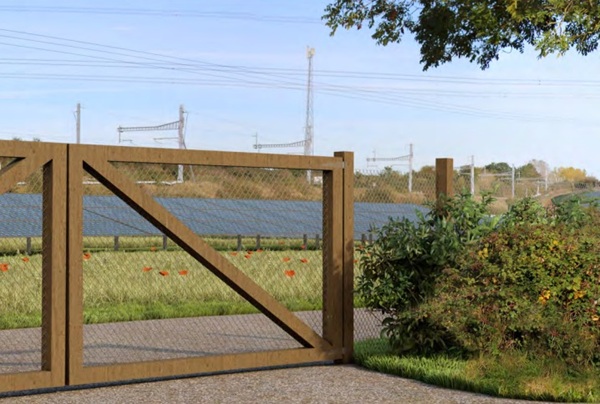
PLANS for a huge solar farm in the countryside near Yate have been rejected for a second time – despite warnings that South Gloucestershire Council could lose a costly appeal.
The proposed development at two sites – Mousewell Farm and Pool Farm – would generate enough green electricity for 11,000 homes.
In April the council’s development management committee refused permission for the scheme. Because that went against the advice of council officers, the application by German energy company RWE had to be reconsidered by the more senior spatial planning committee.
However, its members backed the decision when they met at the end of June, voting 4-1 against the plans.
They said it would be inappropriate development in the Green Belt and that the benefits of clean energy over the 40-year lifespan of the solar farm did not outweigh the harms to the rural setting, including Grade II-listed Mousewell Farmhouse.
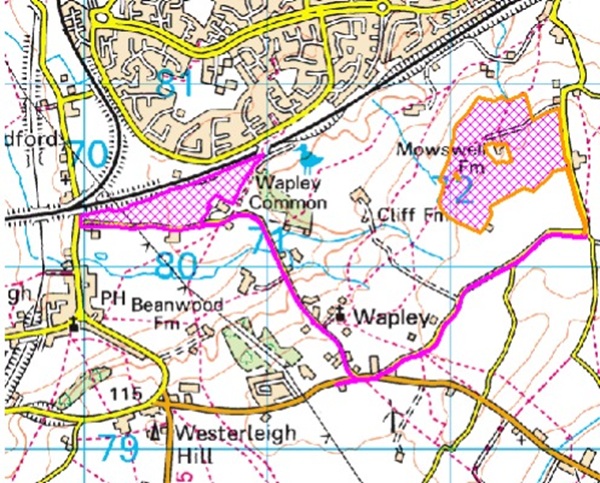
One of the sites is next to Wapley Common and the other is off Sodbury Lane, south of Chipping Sodbury.
Under planning rules, a site in a Green Belt area cannot be developed unless there are “very special circumstances”.
Planning officer Alex Hemming told the meeting the site met the definition of the new category of ‘grey belt’ – land in the Green Belt that does not contribute strongly to the countryside and should not be given as much protection.
He said: “There is a demonstrable unmet need; it’s in a sustainable location.
“The benefits outweigh the harms.”
A report to the committee said: “Members should be aware that it is common in appeals for the benefits of and need for renewable energy, as well as matters such as proximity to grid connection and a grid connection offer, to be accepted as very special circumstances, outweighing the harm to the green belt.”
Principal planning officer Suzanne D’Arcy said: “When members are considering the reasons for refusal, we have a duty for the reasons for refusal to be robust and well-evidenced.”
She said a planning inspector had dismissed a recent appeal against the council in a different case, but “took the view that the council hadn’t properly evidenced one of its reasons for refusal”.
Because of this, and issues around consistency of decision making, the council had to pay part of the applicant’s costs.
Ms D’Arcy said: “When you are considering the application, and you’ve got the previous reasons for refusal from the development management committee, you need to make sure that each one of those stacks up on its own, and could potentially be the sole reason for refusal.
“It’s not a case of throwing everything at the wall and seeing what sticks.”
Committee member Raj Sood (Lib Dem, Frenchay & Downend) said: “This is a very rural setting, and if we give permission then we are stuck with it for the next 40 years.
“I’m in favour of green energy but this is a substantial inappropriate development in the Green Belt and that will cause harm to openness.”
The committee agreed that the site should be classed as Green Belt, not grey belt, and that the “very special circumstances” of the scheme – the benefits of green energy – did not outweigh the harms.
By Adam Postans, Local Democracy Reporting Service